Money and Banking (4): The Behavior of Interest Rates
From Frederic S. Mishkin, The Economics of Money, Banking, and Financial Markets — Chapter 5
Let’s examine how the overall level of nominal interest rates is determined and which factors influence their behavior.
Determinants of Asset Demand
Each statement below holds everything else constant.
Wealth
When wealth rises, people have more resources to buy assets, so the quantity demanded of an asset rises.
Expected Return
When an asset is expected to earn more than its alternatives, the quantity demanded of it rises.
Risk
When an asset becomes riskier than its alternatives, the quantity demanded of it falls.
Liquidity
When an asset is easier to sell quickly than its alternatives, the quantity demanded of it rises.
| Variable ↑ | Quantity demanded |
|---|---|
| Wealth | ↑ |
| Expected return (relative) | ↑ |
| Risk (relative) | ↓ |
| Liquidity (relative) | ↑ |
Supply and Demand in the Bond Market
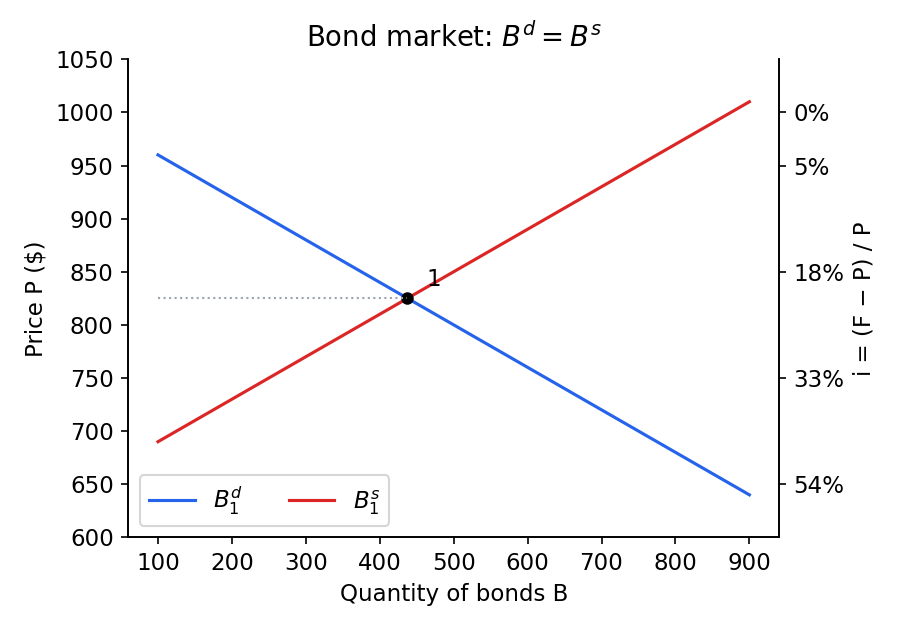
The first approach to the analysis of interest-rate determination looks at supply and demand in the bond market to see how the price of bonds is determined.
Shifts in the Demand for Bonds
| Variable ↑ | |||
|---|---|---|---|
| Wealth | → | ↑ | ↓ |
| Expected interest rate | ← | ↓ | ↑ |
| Expected inflation | ← | ↓ | ↑ |
| Riskiness relative to other assets | ← | ↓ | ↑ |
| Liquidity relative to other assets | → | ↑ | ↓ |
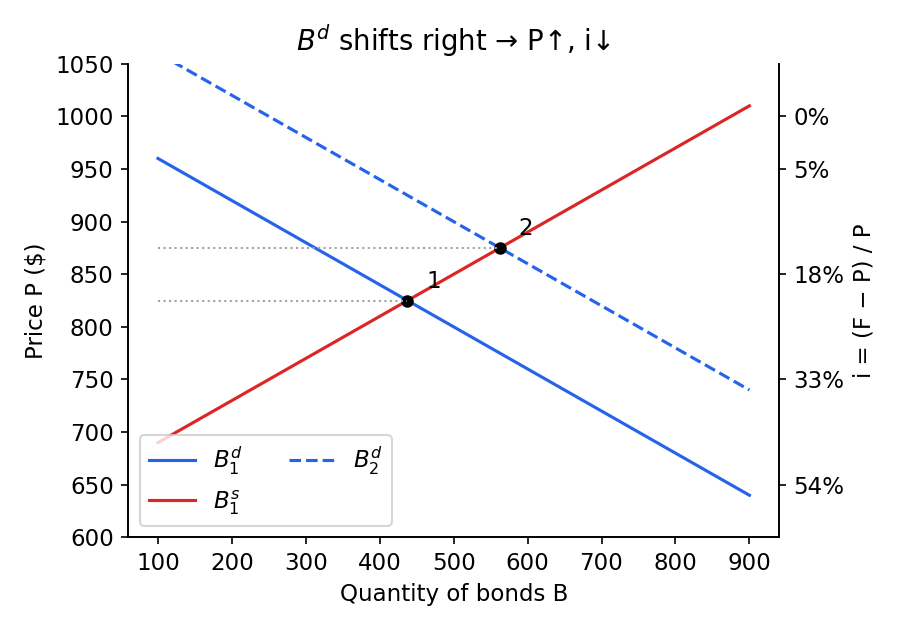
Shifts in the Supply of Bonds
| Variable ↑ | |||
|---|---|---|---|
| Expected profitability of investment | → | ↓ | ↑ |
| Expected inflation | → | ↓ | ↑ |
| Government budget deficit | → | ↓ | ↑ |
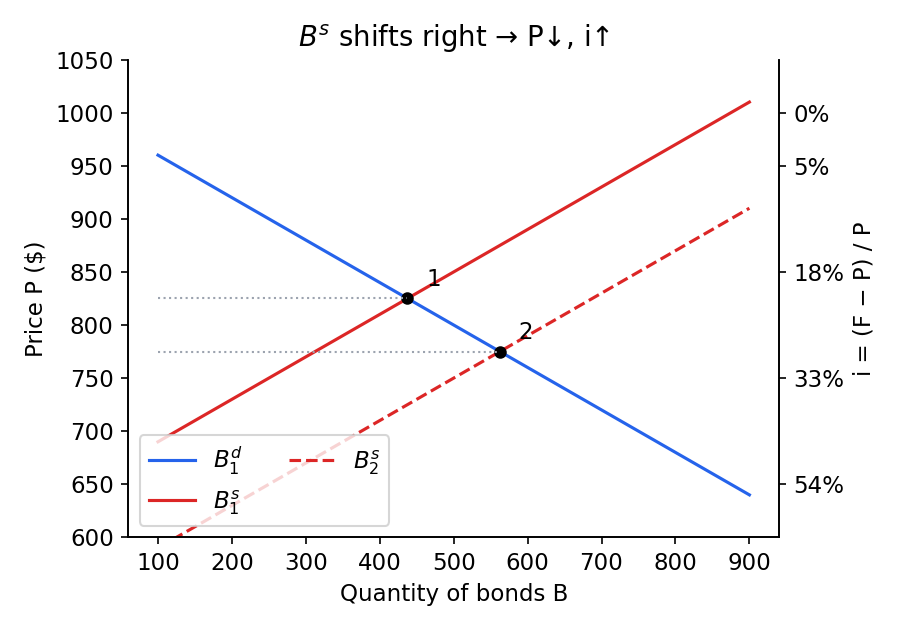
Changes in the Equilibrium Interest Rate
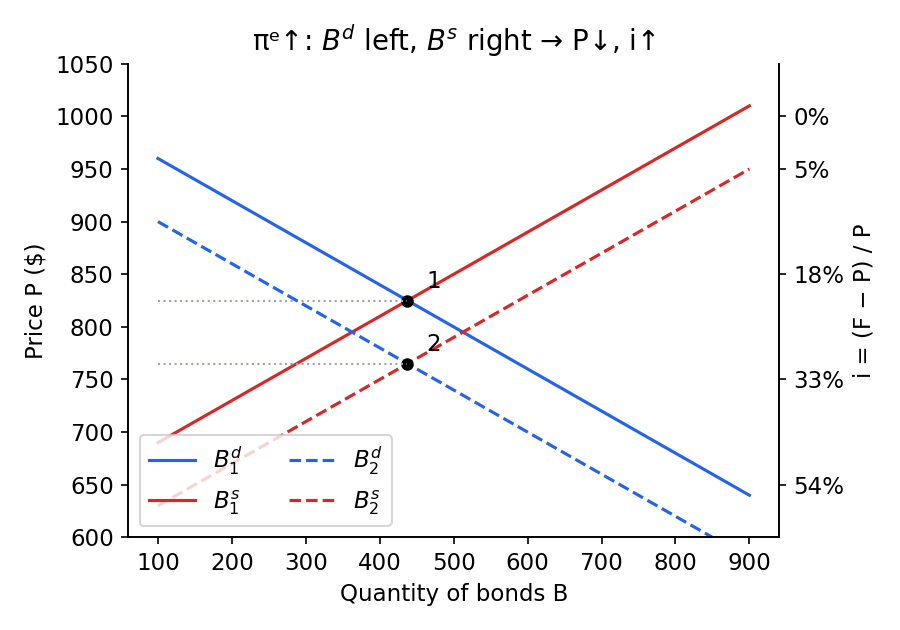
Case: Changes in Expected Inflation — The Fisher Effect
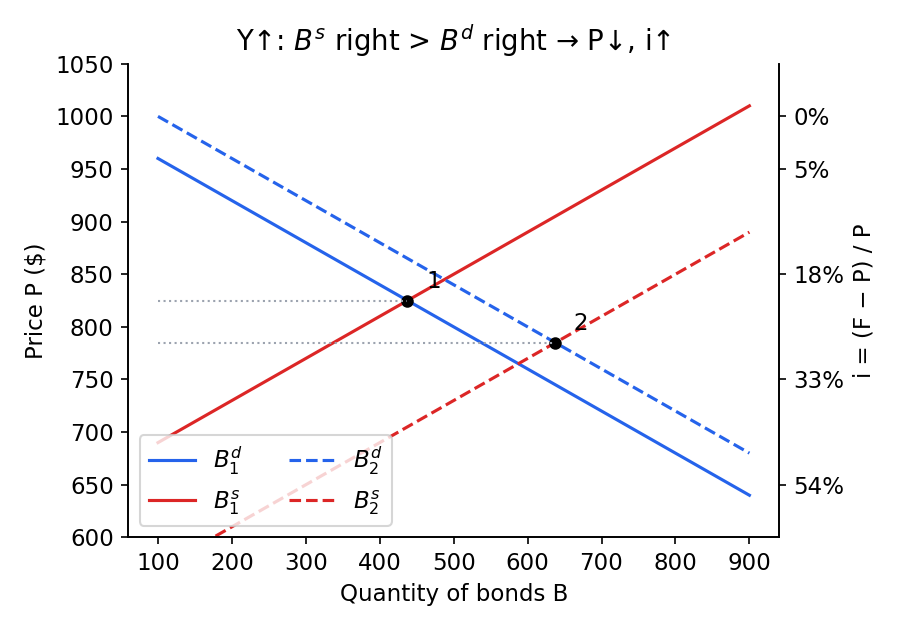
Case: Business Cycle Expansion
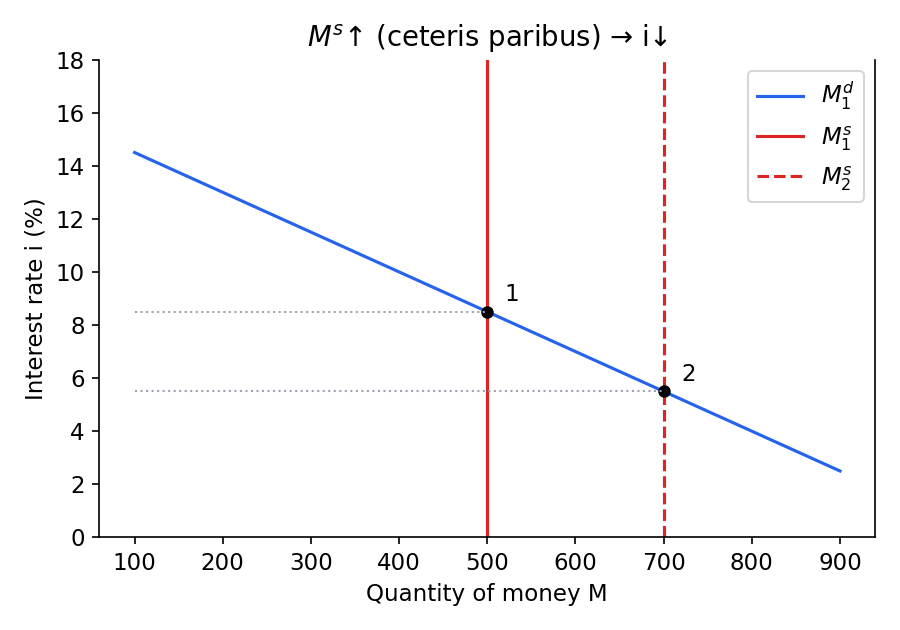
The Liquidity Preference Framework
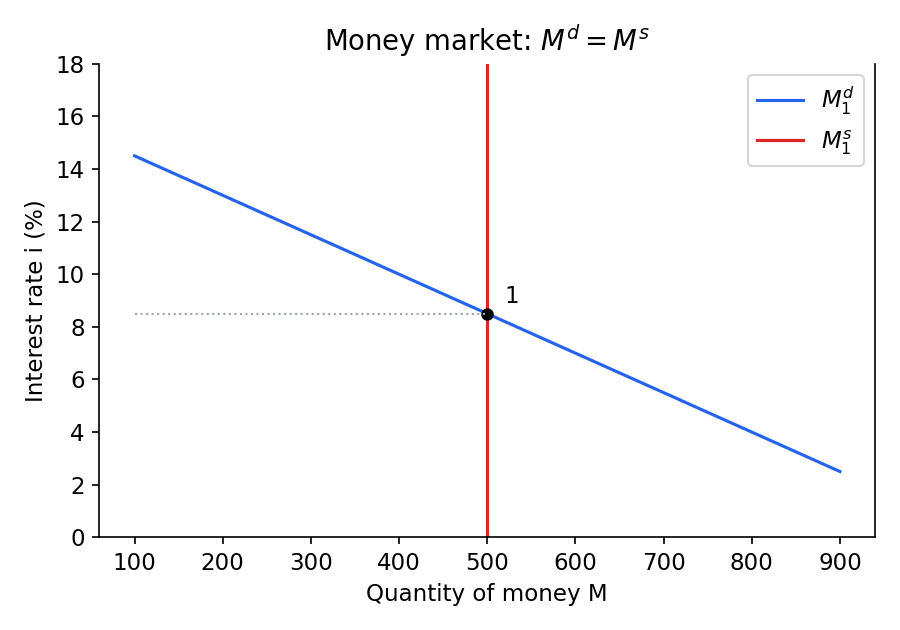
The model states that the interest rate is set by the supply of and demand for money, not bonds. People hold their wealth as either money or bonds, so the two markets are tied together by the following equations.
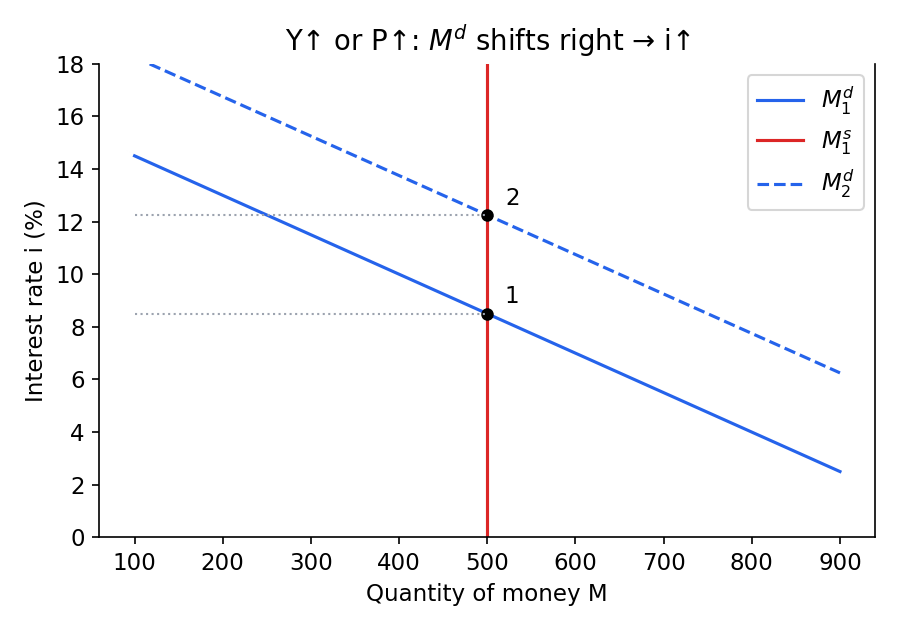
Shifts in the Demand for Money
| Variable ↑ | ||
|---|---|---|
| Income | → | ↑ |
| Price level | → | ↑ |
Shifts in the Supply of Money
| Variable ↑ | ||
|---|---|---|
| Money supply | → | ↓ |